
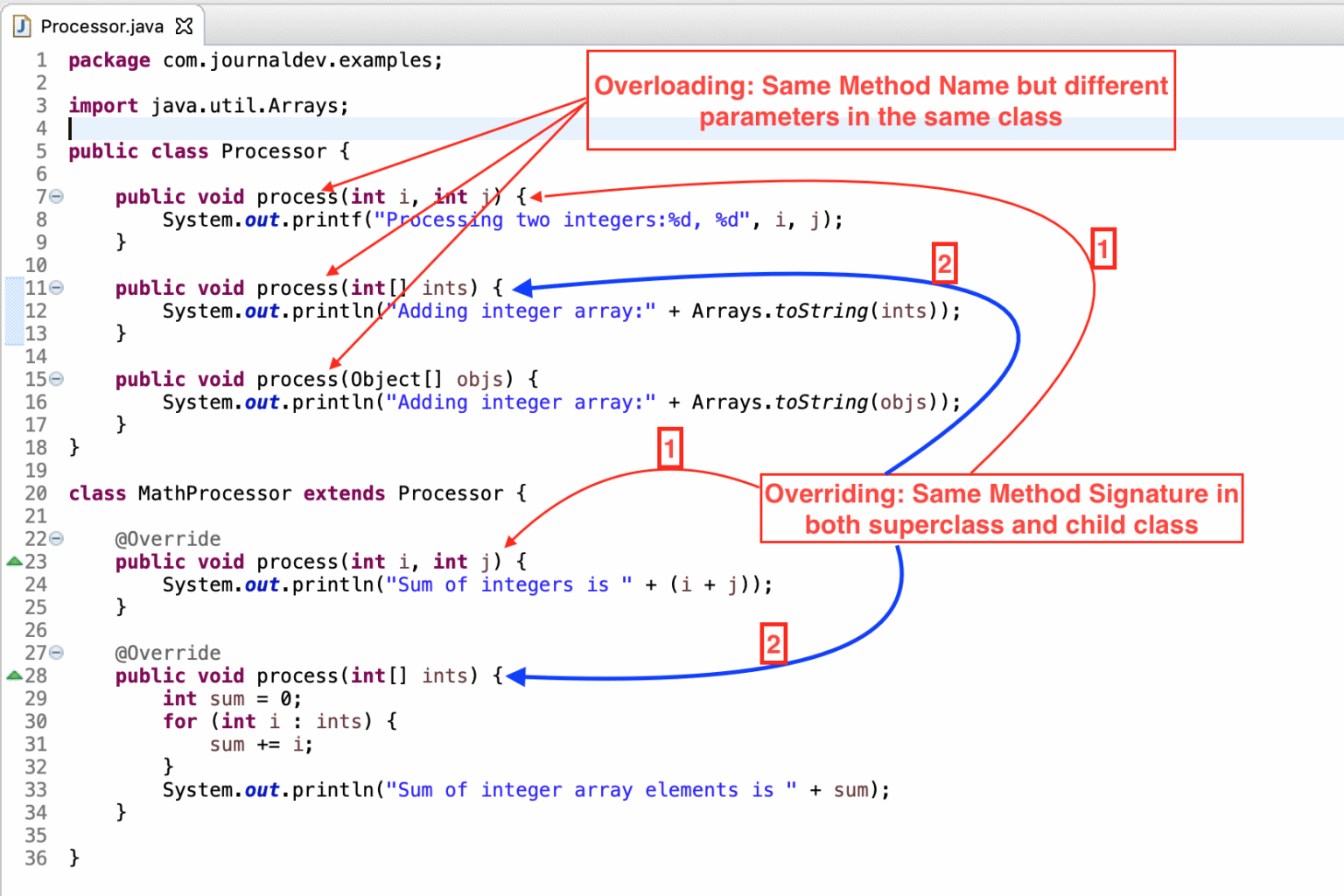
Introduction
In Java, programmers use two important tricks called overloading and overriding. These tricks help code stay clean and easy to change. I will explain both in a simple way with small steps. You will see when to use each trick and why it matters. I add tips from my experience as a coder to make learning faster. I like to teach with short examples and clear rules. The topic is overloading and overriding in java and it shows up in many APIs and frameworks. Practice helps these ideas stick and makes real projects safer and easier to maintain.
What is Method Overloading?
Method overloading lets a class have many methods with the same name. Each version uses a different set of parameters so the compiler can tell them apart. The compiler picks the right one before the code runs. This is called compile-time polymorphism and it helps make APIs easy to read. You can name methods by the action they do, then change only the parameters. Common overloading changes include number of parameters, parameter types, and parameter order. Constructors can be overloaded too. The topic of overloading and overriding in java often starts here for beginners. Keep overloads logical and small.
What is Method Overriding?
Method overriding means a subclass gives a new body to an inherited method. The method name and parameter list stay the same. The decision about which method runs happens at runtime. This is called runtime polymorphism and it lets objects behave in their own ways. Overriding lets a child class change only the behavior it needs while keeping the parent contract. Use the @Override annotation in Java to catch mistakes. Note that private methods and final methods cannot be overridden. When you design classes, think about which methods children should be able to override for custom behavior.
Key Differences Between Overloading and Overriding
Overloading and overriding both reuse method names, but they do very different jobs. Overloading is selected at compile time. Overriding is selected at runtime. Overloading can happen in the same class. Overriding needs a subclass and inheritance. Overloading changes the method signature. Overriding keeps the signature identical. Overloading supports more ways to call a method. Overriding supports specific behavior in child classes. Both are forms of polymorphism, but one is static and one is dynamic. The topic of overloading and overriding in java is clearer when you compare them side by side.
When to Use Overloading
Use overloading when similar actions need small changes in inputs. For example, a print method can accept strings, numbers, or objects. One name can represent a single idea. You can also overload constructors to offer many ways to make an object. Overloading helps keep code short and clear for other developers. Avoid adding too many overloads that confuse the compiler or readers. Give each overload a clear parameter list and intent. The topic of overloading and overriding in java comes up when teams design APIs. Keep overloads consistent and well documented.
When to Use Overriding
Use overriding when a child class needs to change behavior from a parent. For example, a Shape class can have a draw method. Circle and Square can override draw to paint themselves. Overriding lets code call a parent type and get the right child method at runtime. This allows flexible designs and plug-in behavior in frameworks. Use @Override to let the compiler check your intent. Avoid overriding methods that are not meant to change, such as core logic that must remain stable. The topic of overloading and overriding in java shows up often in design patterns like Template Method.
Simple Overloading Example
Here is a small idea to show overloading in practice. Imagine a class Printer with several print methods. One method accepts an int. One accepts a String. One accepts two parameters. All methods share the same name. The compiler picks the right one by parameter type and count. This makes code easy to read and group related actions. Keep parameter lists distinct so the compiler has no doubt. The topic of overloading and overriding in java becomes practical when you try such examples. Try writing a small Printer class to see how the calls resolve.
Simple Overriding Example
A short example shows overriding next. Class Animal has a speak method. Class Dog extends Animal and overrides speak to bark. Code holds an Animal reference but points it to a Dog object. At runtime, the Dog.speak method runs. This is runtime polymorphism in action. It allows the code to stay generic while letting each subclass add its own behavior. Overriding keeps base contracts intact and supports patterns like Strategy. The topic of overloading and overriding in java feels natural after a few small experiments. Practice with shapes and animals to build your intuition.



Rules and Best Practices
Follow Java rules to avoid subtle bugs. Use @Override where you mean to override. Make sure method signatures match exactly. Watch return types, though covariant returns are allowed for overrides. Pay attention to declared exceptions and access levels. Do not reduce visibility when overriding. For overloading, keep parameter lists clearly distinct. Never overload only by return type. The compiler cannot pick a method by return type alone. Avoid ambiguous overloads. Add unit tests to show expected calls and behavior. The topic of overloading and overriding in java becomes safer when teams follow these rules and write tests.
Common Mistakes
Developers sometimes mix these two ideas up in real code. One common error is overloading when overriding is needed. Another is expecting private methods to override; they do not. Final methods also cannot be overridden by children. Static methods belong to the class and use static binding. They do not override in the dynamic sense; they hide the parent method. People also create too many overloads and make APIs hard to use. Write clear tests and comments to prevent confusion. The topic of overloading and overriding in java is easier when you avoid these common traps.
Advanced Topics
There are deeper points to learn as you get more advanced. Covariant return types let a subclass return a more specific type in an override. Generics interact with overload resolution and can be subtle. Autoboxing and varargs affect which overloaded method the compiler picks. Default methods in interfaces add rules when multiple paths exist. Method references and lambdas can touch overload resolution too. Study the Java Language Specification for exact behavior in edge cases. The topic of overloading and overriding in java can be complex in large systems, so read specs and test carefully.
Overloading vs Overriding: Quick Checklist
Here is a short checklist you can use in day-to-day coding. If you need multiple ways to call a method, use overloading. If a subclass must change behavior, use overriding. Use @Override to avoid mistakes. Do not overload only by return type. Remember static and final methods cannot be overridden. Constructors cannot be overridden; they can only be overloaded. Private methods are not visible to subclasses for overrides. Keep overload sets small and clear. The topic of overloading and overriding in java becomes a habit with a simple checklist like this.
Real-world Analogy to Remember
Think of overloading like a Swiss Army knife with many tools on one handle. Each tool shares the same handle but works a bit differently. Overriding is like changing a factory blueprint so one model works differently. The blueprint is the parent method and the new model is the subclass method. Both ideas help build flexible systems. One groups similar actions under one name. The other gives custom actions for special cases. I use these analogies when I teach teams. The topic of overloading and overriding in java becomes easier to recall with these images.
FAQs
Q1: Can constructors be overridden?
No. Constructors cannot be overridden in Java because they are not inherited. Constructors can be overloaded in the same class to provide many ways to create objects. A child class cannot override a parent constructor. The child can call a parent constructor using super to initialize parent fields. Use super to pass values to the parent. Constructor overloading helps create flexible builders and simpler initialization patterns. Remember that constructors are not methods and do not participate in overriding.
Q2: Can static methods be overridden?
Static methods cannot be overridden because they belong to the class, not instances. If you declare a static method with the same signature in a child, it hides the parent. This is called method hiding. The compiler picks static methods by the reference type at compile time. Do not expect dynamic dispatch for static methods. Use instance methods when you need polymorphic behavior and dynamic binding. Tests can show the difference clearly.
Q3: Does return type affect overloading?
No. Return type alone does not affect overloading. The compiler resolves overloads by method name and parameter list only. Two methods cannot differ purely by return type. That would be ambiguous to the compiler and not allowed. If you need different return types, use different names or different parameter lists. Use clear naming to avoid confusion. The topic of overloading and overriding in java reminds us to prefer clarity over clever tricks.
Q4: How does @Override help?
The @Override annotation helps the compiler check your intent when you override a method. The compiler will fail the build if your method does not match any parent method. This saves time and prevents silent bugs when signatures change. It also makes your intent clear to other readers. Use @Override wherever you mean to override. It improves readability and tooling support and is a best practice in Java code.
Q5: Can private methods be overridden?
Private methods cannot be overridden because they are not visible to subclasses. If a child class declares a method with the same name, that method is new for the child. This is not overriding but method hiding in effect. Keep this difference in mind when refactoring. Use protected or public visibility for methods that subclasses should be able to change. Tests and code reviews help catch accidental hiding.
Q6: Which is safer, overloading or overriding?
Both are safe when used correctly. Overloading is great for API convenience, and overriding is great for behavior customization. Each has rules that you must follow. Use unit tests to assert the expected overload is called. Use @Override to verify overrides. Keep overload sets small and readable. Treat safety as a design goal and prefer clear code over clever code. The topic of overloading and overriding in java becomes part of your craft with good habits.
Conclusion
Overloading and overriding in java are core skills for every Java developer and they unlock flexible design. One groups related actions under one name, and the other lets subclasses change behavior safely. Use them with clear rules, tests, and the @Override annotation to catch errors early. Practice with small, focused examples to build confidence. If you want, I can provide real code snippets for both overloading and overriding. I can also write unit tests to show expected behavior. Tell me which example you want first, and I will write the full code and tests.